How Octopus V works.
From signing up to running your full business on one platform. Here is the walkthrough.
Five pieces, one platform.
Your Account, Your Businesses
One Octopus V account. As many businesses as you need. Each business has its own dashboard, its own books, its own customers. Switch between them in one click.
Your Website (OS / OS MAX only)
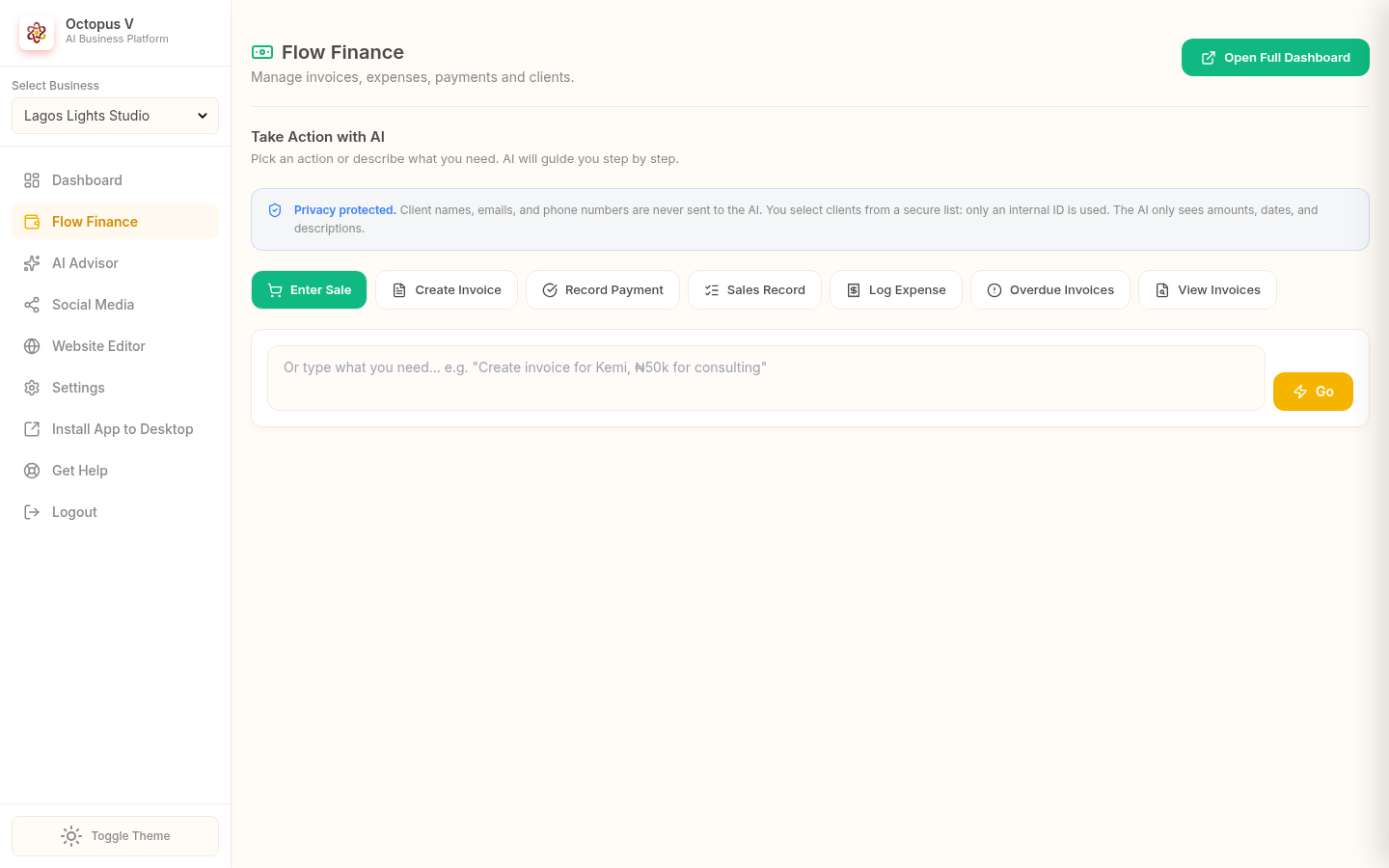
On OS plans, AI builds your website in minutes. You describe what you want. AI generates the design, layout, and content. Your products show up on the site automatically. Customers buy. Sales record in your books.
Finance and Bookkeeping
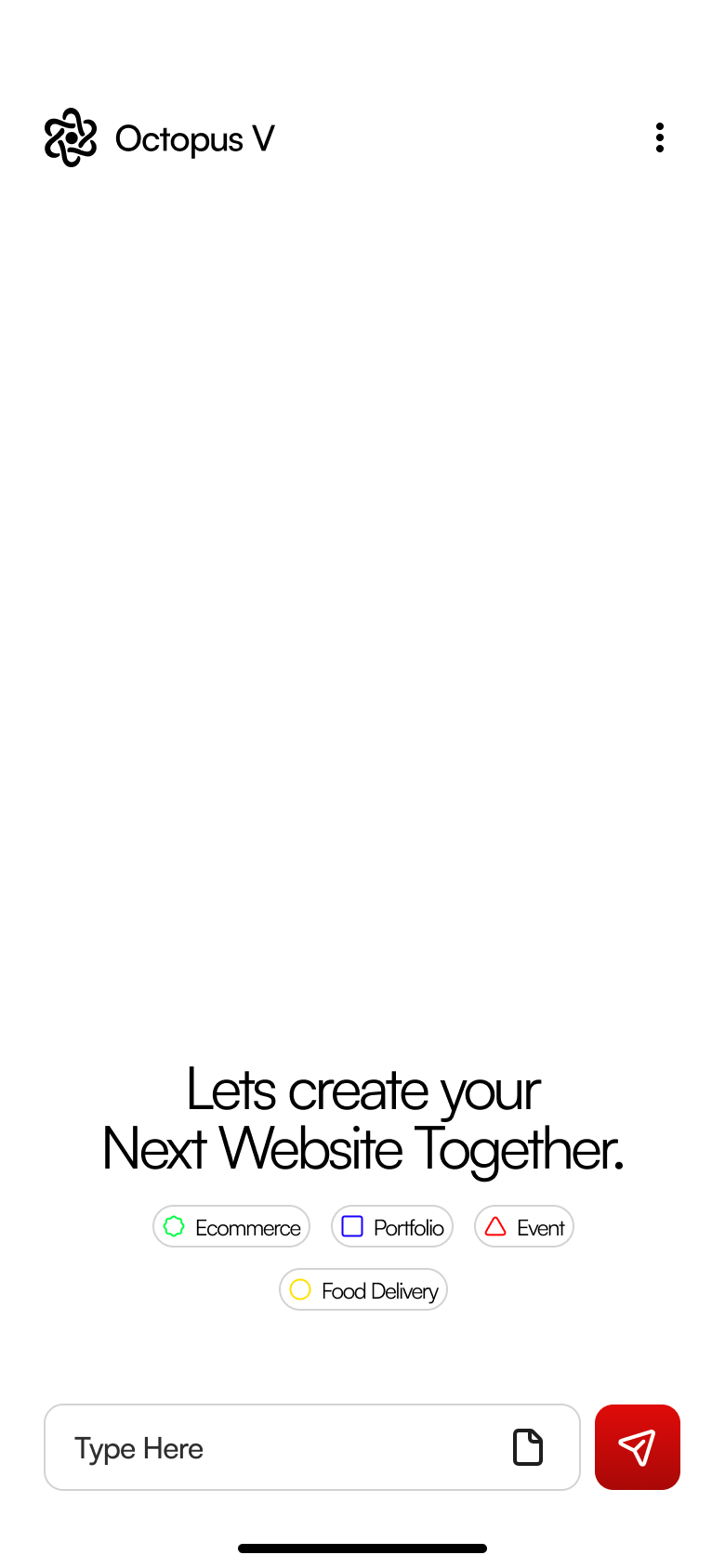
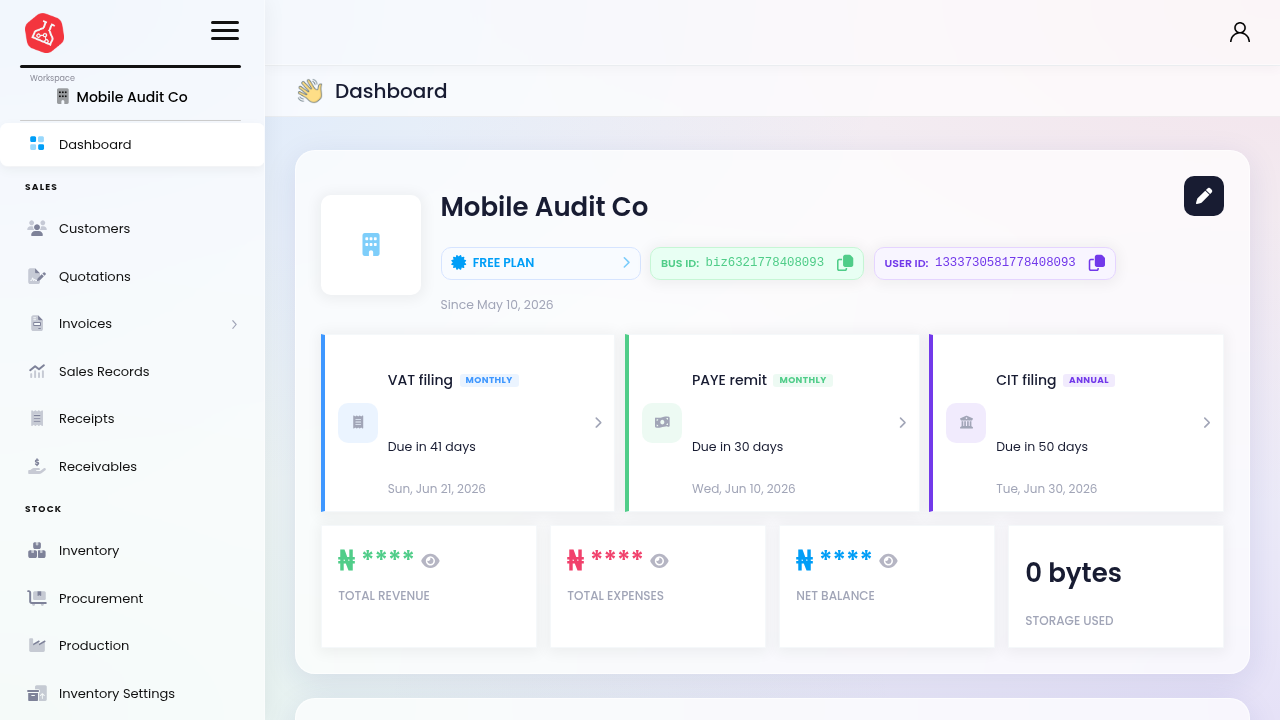
Invoices, quotations, receipts, customer records. Sales records, expenses, transactions, receivables. Multi-currency. Multi-tier pricing for wholesale and retail. Customer types. Procurement batches with FIFO cost tracking. Production runs with overhead allocation. Recipe templates. Everything a Nigerian business needs to keep books that an accountant trusts.
Inventory That Fits Your Shape
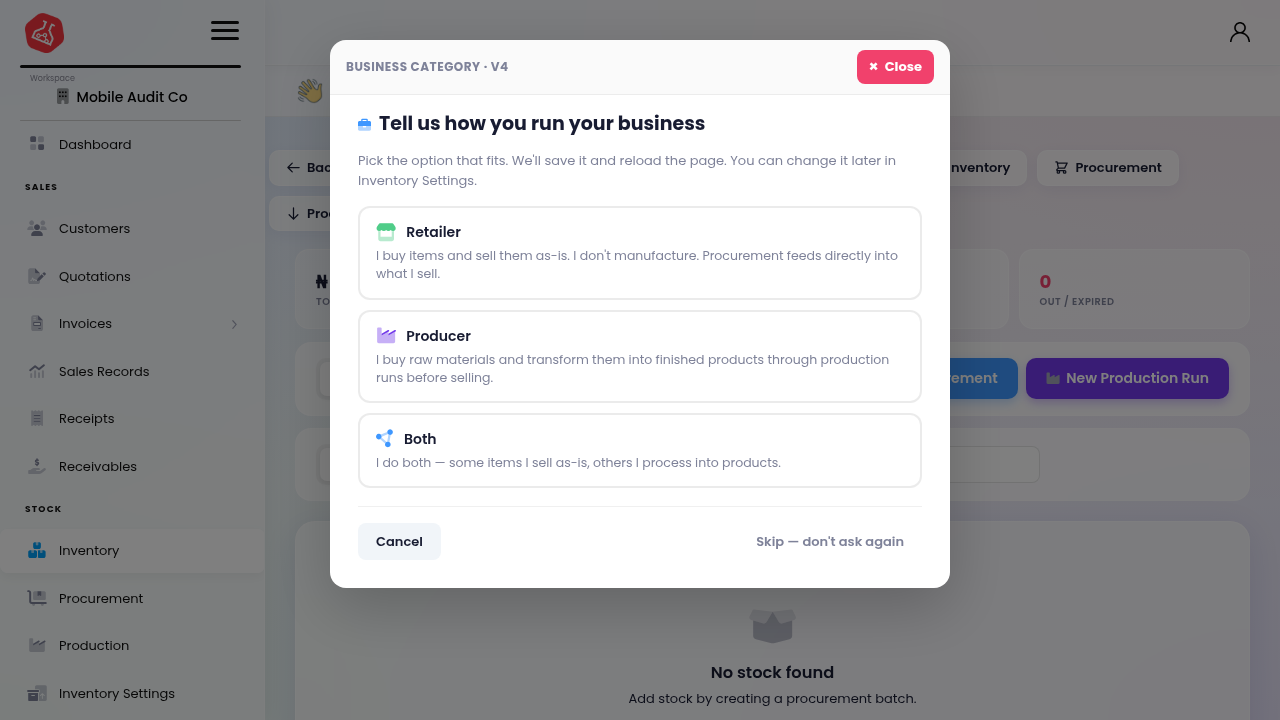
If you sell stocked goods, track stock. If you produce, track raw materials and finished products separately. If you sell services or made-to-order items, skip inventory entirely. Octopus V respects what your business actually is.
AI That Actually Helps
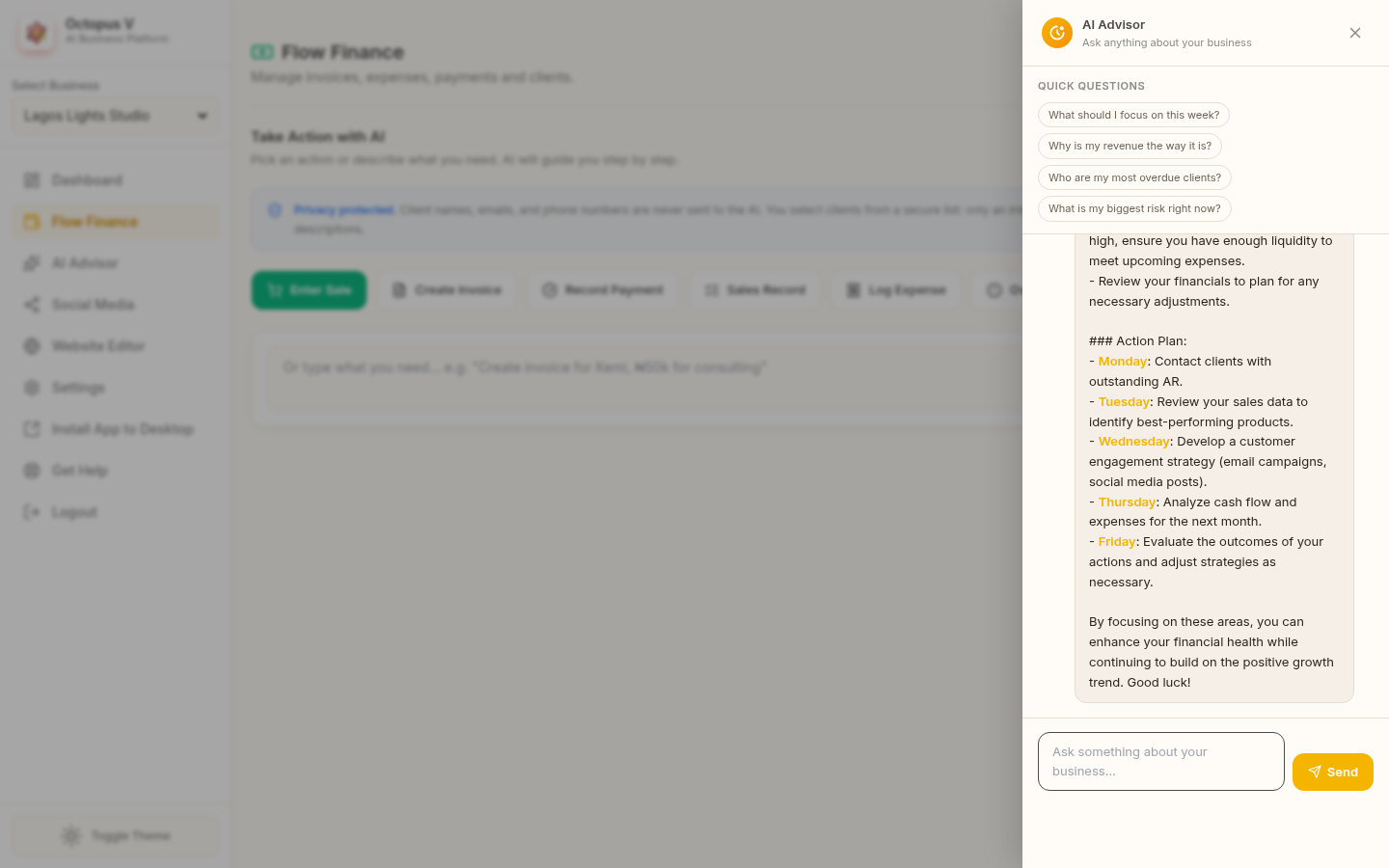
AI Business Advisor answers questions about your business in plain English. Action Hub reads your sales, your website analytics, and your customer behavior, then tells you the top 3 things to focus on this week. AI Invoice Assistance writes invoice line items for you. All powered by your real data, not a generic chatbot.
Two systems by design. Joined where it matters.
Most platforms force every product into one inventory model. Some say everything must be in stock. Others say your website is somebody else's problem. Neither fits how Nigerian SMEs actually operate. Octopus V splits the question: what is your inventory, and what do you list for sale? They overlap, but they are not the same.
Stocked products
Sold on website AND tracked in inventory. Sales deduct stock automatically. Cost tracking and COGS handled.
Made-to-order or services
On the website. Not in inventory. A custom dress, a consultation, a cake to be baked. Customer orders, you fulfill, the books reflect the revenue.
Raw materials, supplies, internal stock
In inventory. Not on the website. Fabric, packaging, ingredients, tools. Used for production runs. Cost tracking only.
What a Tuesday looks like on Octopus V.
Imagine Esther runs a detergent business in Lagos. Here is how her Tuesday goes.
-
8:00 AM
She opens the Octopus V app on her phone. Push notification: "5 customers bought from your website overnight. Stock decreased by 12 cartons."
-
9:30 AM
She gets to the warehouse. Action Hub shows: "Bottles are running low. You will be out in 4 days at current pace."
-
11:00 AM
She places a procurement order on the platform. Cost recorded automatically. Expense logged.
-
1:00 PM
A wholesale customer calls. Esther creates an invoice on her phone. The customer's wholesale price is applied automatically because she set up customer types.
-
3:00 PM
Power goes out. Network drops. She still records 8 cash sales. They sync when she gets back online.
-
5:00 PM
End of day. Dashboard shows revenue, expenses, profit margin. AI Advisor flags one customer who has not ordered in 60 days. She sends them a follow-up message.
-
8:00 PM
Esther closes her laptop. The platform is doing the rest.
This is what one platform looks like when it is built for how you actually run your business.